Some people are obsessed with tropical beaches. Others want five-star resorts, famous cities or the latest Instagram hotspot.
I’ve always had a thing for somewhere slightly different: remote islands that are ridiculously difficult to reach.
The more isolated they are, the more interested I become. Add a strange history, a tiny population, limited flights and a location that makes you zoom out several times on Google Maps just to work out where you are, and you’ve basically got my attention.
And few places tick those boxes quite like St Helena.
This tiny British island sits alone in the South Atlantic, roughly 1,200 miles from Africa and around 1,800 miles from South America. It covers only about 47 square miles and has a population of just a few thousand people.
Basically, if you wanted somewhere to disappear for a while, someone did an excellent job choosing the location.
And historically, that was exactly the point.
There is something I love about destinations where simply getting there feels like an achievement.
St Helena used to take this to another level.
For generations, there was no airport at all. If you wanted to visit, you came by sea. The famous RMS St Helena linked the island with southern Africa and the journey could take around five days across the South Atlantic.
Five days.
Not five hours on Ryanair followed by an argument about the size of your backpack. Five actual days crossing the ocean before you even arrived.
In an age when I can wake up in Vienna, have lunch somewhere else in Europe and potentially be in Asia before breakfast the following morning, there is something strangely fascinating about a place that remained so disconnected from the rest of the world for so long.
The ship wasn't simply transport. For St Helena, that connection with the outside world was part of island life itself.
Then everything changed.
St Helena Airport was built with the idea of finally ending the island's almost total dependence on ships.
It wasn't exactly the smoothest introduction.
During testing, the airport became famous internationally because of challenging wind conditions and concerns about windshear on approach.

Scheduled commercial services eventually began in 2017, finally connecting St Helena with southern Africa by air.
Suddenly, a journey that once required days at sea could be completed in a matter of hours.
Today, the main commercial connection is operated by Airlink from Johannesburg, with additional services operating at certain times from Cape Town and towards Ascension Island.
So technically, St Helena isn't particularly difficult to reach anymore.
But "easy" is definitely relative.
This is another reason I find St Helena fascinating.
Building an airport didn't suddenly turn the island into a normal destination.
St Helena Airport sits high above the Atlantic on a dramatic plateau, and the island's geography can create challenging flying conditions.
Strong winds, windshear, turbulence and low cloud can disrupt air travel, and poor weather can potentially lead to delays, schedule changes or cancelled flights.
Pilots operating into St Helena require specific training because of the unusual conditions surrounding the airport.
This means I definitely wouldn't plan a ridiculously tight itinerary around a trip to St Helena.
If you're flying hundreds of miles across the South Atlantic to one of the world's most isolated inhabited islands, giving yourself some flexibility is probably a very good idea.
And weirdly, I think that makes the place even more appealing.
It hasn't made St Helena ordinary.
If St Helena were simply remote, I'd already find it interesting.
But then you start reading its history.
The Portuguese discovered the island in the early 1500s, although permanent settlement came later under the English.
For centuries, St Helena became an important stopping point on the enormous sea routes connecting Europe with Africa and Asia, much of that time under the control of the East India Company.
Think about that for a moment.
This tiny dot in the South Atlantic was once connected to some of the biggest movements of ships, people and goods on Earth.
But its extreme isolation also gave the British another idea.
If there was somebody you really, really didn't want coming back...
Send them to St Helena.
This is probably what most people who know St Helena associate with the island.
After his defeat at Waterloo, Napoleon Bonaparte was exiled to St Helena in 1815.
And this time the British weren't taking any chances.
Elba had clearly been a little too convenient.
St Helena was different.
Thousands of kilometres of ocean made escaping slightly more complicated.
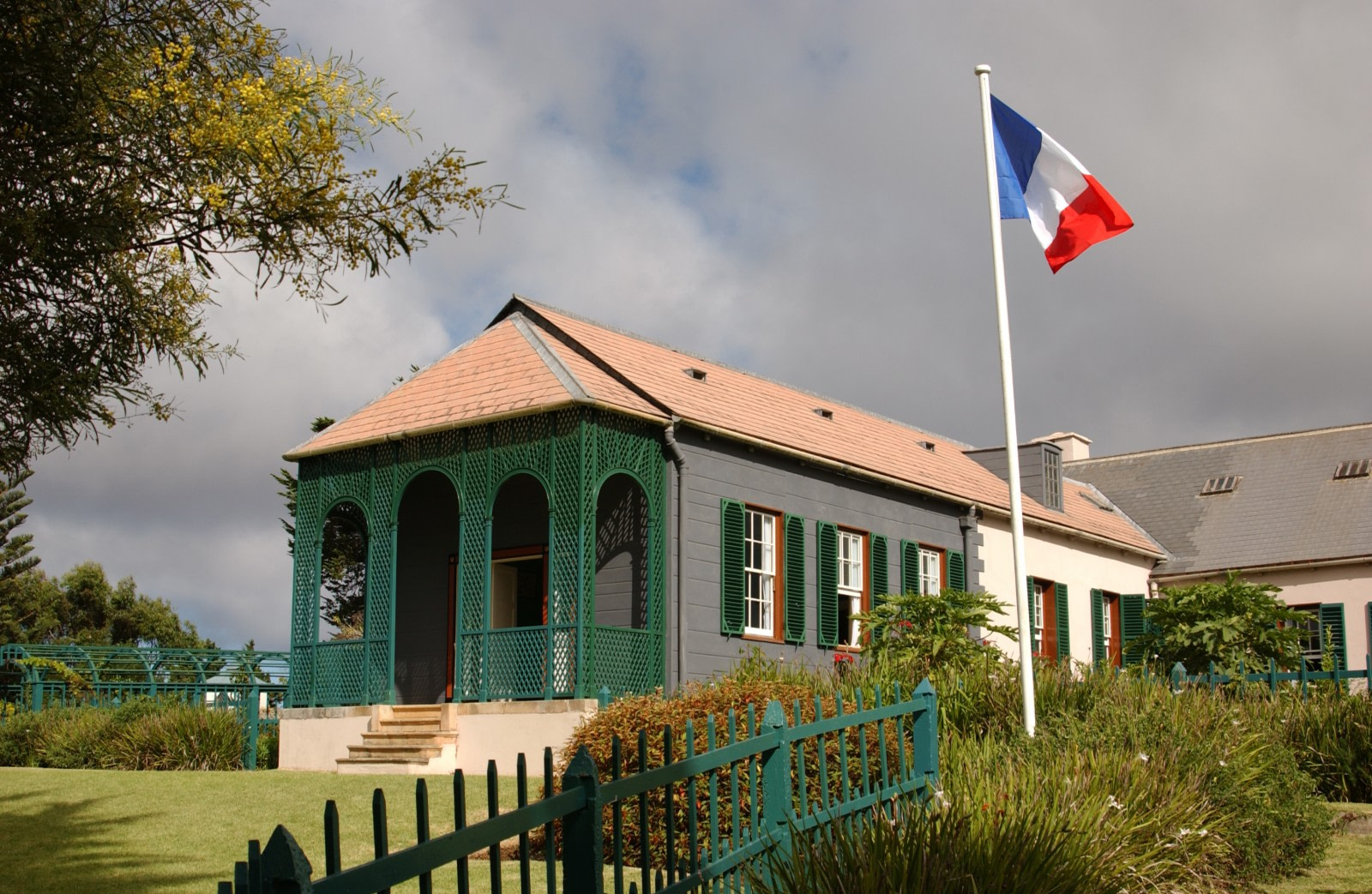
Napoleon eventually lived at Longwood House, where he spent the final years of his life before dying on the island in 1821.
Longwood House and the site of Napoleon's original tomb can still be visited today.
I find the whole thing fascinating.
One of the most powerful men in Europe, someone whose armies had marched across much of the continent, ending his life on this tiny volcanic island in the South Atlantic.
And today you can actually walk through the places where he spent those final years.
For somebody who likes both travel and history, that's difficult to beat.
The deeper you dig, the stranger and more complicated St Helena becomes.
Thousands of Boer prisoners were held there during the Second Boer War. Zulu leaders were exiled there. The East India Company shaped the island for generations. Its history is also closely connected with slavery and the transatlantic slave trade.
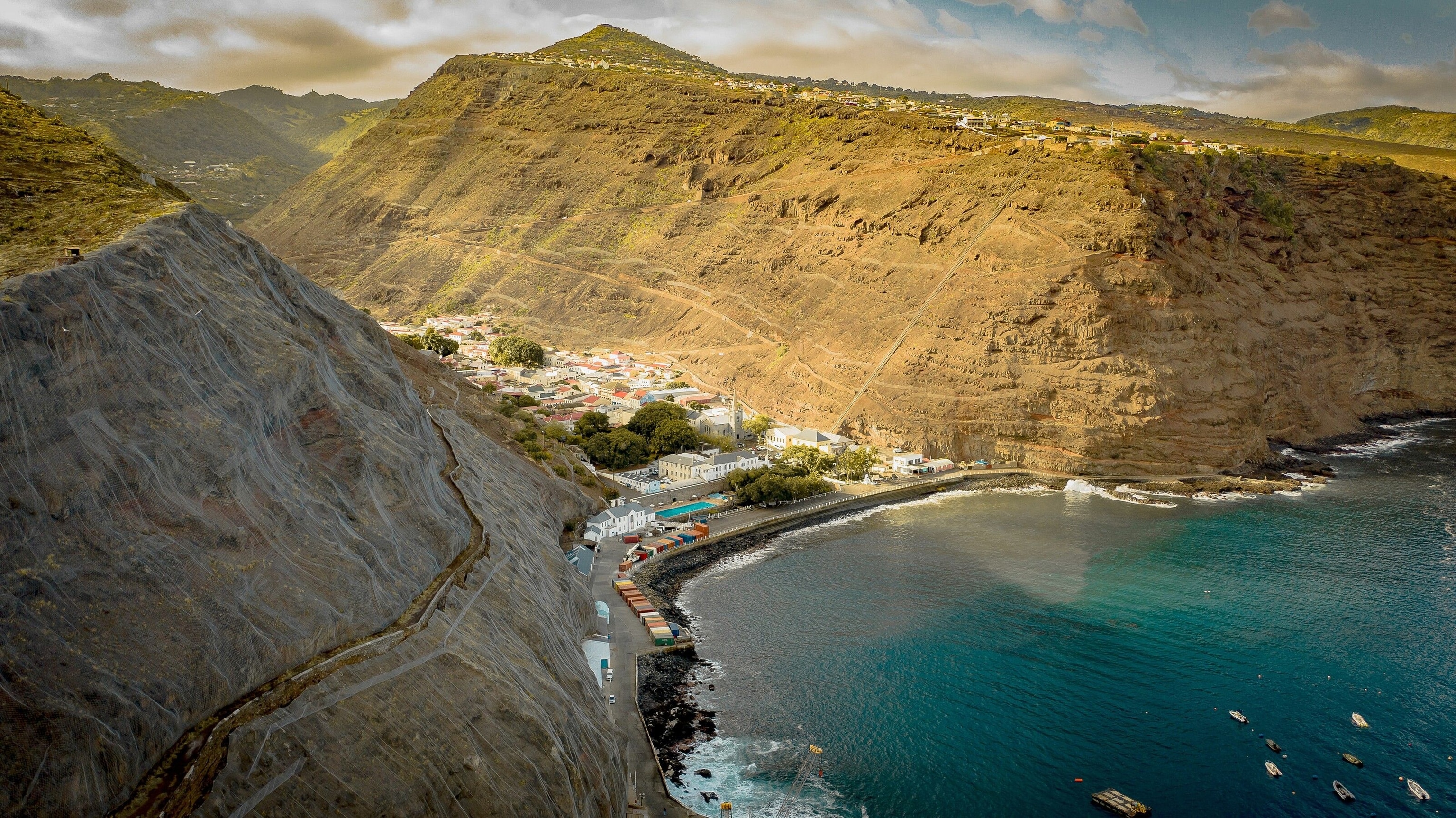
Then you have Jamestown, the tiny capital squeezed into a dramatic valley between enormous volcanic cliffs.

It looks almost as though someone accidentally dropped a miniature Georgian town into the middle of Jurassic Park.
Above it is Jacob's Ladder, the ridiculously steep staircase climbing the hillside above Jamestown.
It has almost 700 steps.
It's exactly the sort of place where I'd tell myself climbing it was a brilliant idea and reconsider that decision somewhere halfway up.
Because apparently St Helena wasn't interesting enough already.
Meet Jonathan the giant tortoise.

Jonathan lives in the grounds of Plantation House, the governor's residence, and is believed to be the world's oldest known living land animal.
He was already fully mature when he arrived on St Helena in the 19th century.
Just think about that.
You can visit an island famous for Napoleon and then meet a tortoise that has been wandering around there since the Victorian era.
Again: how can you not love this place?
This is another thing that surprised me.
When you imagine an isolated volcanic island in the middle of the South Atlantic, you might picture somewhere barren and windswept.
Parts of St Helena certainly look like that.
Then drive a few kilometres and suddenly you're surrounded by lush green hills, forests and completely different scenery.

The island has a remarkable number of different microclimates considering how tiny it is.
Its extreme isolation has also allowed plants and animals to develop that exist nowhere else on Earth.
There are dramatic coastal walks, volcanic landscapes, historic fortifications, diving, whale sharks, unusual wildlife and wonderfully dark skies.
For an island only around 47 square miles in size, it punches ridiculously above its weight.
This might be what fascinates me most.
Building an airport could easily have completely changed the character of the island.
St Helena went from requiring a multi-day journey by ship to having a direct air connection with southern Africa.
But it hasn't become Tenerife.
There aren't dozens of planes arriving every day.
There aren't enormous resorts covering the coastline.
There isn't a constant procession of tourists arriving for €29.99 weekend breaks.
You still have to want to go to St Helena.
And I think that makes a huge difference.
It's one of those destinations where practically nobody ends up accidentally.
You don't book it because Skyscanner randomly showed you a €39 fare.
You go because you've read about this strange little island, looked at where it is on a map and thought:
That's basically where I am.
I’d love to say yes.
But realistically, I’ll probably never get there.
St Helena is fascinating precisely because it is so remote, but that remoteness also makes the trip difficult to justify.
First you have to get yourself to southern Africa. Then you need to build the entire trip around a very limited flight schedule to St Helena.
Add strong winds, poor weather and the possibility of delays or disrupted flights, and suddenly this isn't the kind of destination where I’d feel comfortable planning a tight itinerary.
The whole journey is long and unpredictable.
And then there is the cost.
By the time you add the flights to Johannesburg or Cape Town, the onward flight to St Helena, accommodation and enough extra time in the itinerary to protect yourself against possible disruption, this can become a very expensive trip to visit one tiny island.
As much as I love unusual destinations, even I have to admit that there are probably many other places I could visit for the same amount of money and with considerably less uncertainty.
So St Helena might remain one of those destinations I’m completely obsessed with without ever actually visiting.
And that's probably OK.
I’ll keep zooming into it on Google Maps, reading about its history and watching far too many YouTube videos of people landing at the airport, exploring Jamestown, driving around the island and meeting Jonathan.
Sometimes part of the fun of travel is actually going somewhere.
And sometimes it's simply being fascinated by a place that feels almost impossibly far away.
For me, St Helena might always be the second one.
Maybe St Helena isn't for everybody.
If your idea of a holiday involves huge resorts, shopping malls, nightlife and ten flights home every day, I can think of easier destinations.
But that's precisely why I'm obsessed with it.
Remote location. Difficult journey. Incredible history. Napoleon. A nearly 200-year-old tortoise. Volcanic scenery. Challenging airport. A tiny community in the middle of the South Atlantic.
What more do you want?
The airport may have made St Helena easier to reach, but thankfully it hasn't removed the sense that you're travelling somewhere genuinely unusual.
And in a world where almost everywhere feels increasingly connected, destinations that still require a little effort are becoming increasingly special.
St Helena will probably stay on my imaginary travel list forever.
The journey is long, expensive and unpredictable enough that I may never actually make it there.
So for now, I’ll probably do what I’ve been doing already: keep watching YouTube videos about it and remain completely fascinated from afar.
If St Helena is your kind of place too, here are a few more unusual destinations and travel ideas worth disappearing into.